25 November 2010

Conceptual Models

In the Munich assignment we were asked to think about the site visually, to do this i produced models to help me develop my design idea below are some examples.


12 November 2010

Maldon Finale

Final Design for Maldon Promenade Park. A thershold between land and water.


2 November 2010

Luke Engleback


Whilst reading a issue of the Landscape Journal I came across a designer by Luke Engleback, looking him up online I came across his website some images are shown above. I was really interested in his projects and ethos shown on his website. The drawing and style was also something I was drawn to. I definitely think I will be looking at this designer in the future. Below is a link to Studio Englebacks web page.


15 October 2010

Tollesbury Initial Reseacrh

One of the first assignment we have been asked to do in our CDP module this year is to produce a feasibility report on our sites - mine being Tollesbury Marina. The report has included inventory analysis and appraisal as well as a SWOC and design visions. I really enjoyed writing the report as it really got me into my site and how it functions and the different uses of the area. I have tryed lots of different techniques to get a good understanding of the site, including model making, drawing and looking at more factual issues like the climate.
I also looked at some case studies to help with my development at Tollesbury which I will up load soon.

Modelling the Site


Sketching Visions


2 October 2010

A Rain Shelter

The first task we have been given in Public Landscapes is to design a rain shelter.

"When the shelter is sure, the storm is good" - Henri Bosco

The site which were given to place our rain shelter was the land next the stream which links the main campus with the engineering block shown below:


For me the most exciting thing about this site was the Taxodium distichum (swamp cypress) trees, so i decided to take this inspiration further and look into where trees originated from, i found that they come from south west USA down to the Guatemala rainforest's, from this i them started to look more into the Guatemala rainforest's and found that this was the location of the Tikal National Park: the ancient Mayan city with large stone buildings I also looked at local rainforest communties and what they used as rain shetler using woven palms as roofs.


All of these thoughts i sketched down onto paper (shown above) something that i found extremly useful to collect my thoughts. I also looked into the swamp cypress and how they have "knees" which allow the tree to breath. The knees were also prefect for the brief and the fact that they are on the thershold between land and water exactly. (Shown below)


From all of this research i then made some models to try and express my ideas, to start with i could only think about the community rainforests, but then i began to think my conceptual looking at the knees again and produced a shelter out of paper mache which syblolise the knees of swamp cypress trees - i then wanted to use my research that i had done on the Tikal buildings and decided to make my next model out of stone inspired by the stone Mayan buildings i also used the trainaglar shape that both the buildings and knees have and came up withe the following ideas: 


The final image being my final design. The image in the middle shows the model being tested to see if it could was water proof and whether it could hold and release the water. Which it did and it made an exciting shelter for people to explore and experience the thershold between land and water.

30 September 2010

Mersea Island & Maldon Promenade Park

Yesterday we took a site visit to Mersea island and Maldon prom to take a look at the threshold between land and water, for me i found this quite difficult considering i have grown in these places since a young age. Mersea for me i have always related it to MUD and lots of it, but yesterday made me see it in a whole different way and it was really interesting, as we walked along the creeks and mud flats where the the oyster beds are I really began to think about that threshold.

Maldon is also somewhere which I've visted regually for various events throughout the year including the mud race, the maldon regetta, concents and general summer days out. Maldon Prom is the laction for our Public Landscapes site. Shown below the field to the far right located to the left of the yahct club in the boat shaped.


My first thoughts of the site were the lack of views out onto the river. The field is also a lot higher than the rest of the prom which seems odd almost as if there as land fill dumped onto the site. The site is also surrounded by a memorial walk for local people who died in the second world war, looking into it in more depth it just seems than random trees have been planted around the field to produce a walkway and there was really much thorght put into it. This is something that I will definalty have to look into as its quite a sensitive subject and I dont want offend anyone but maybe there is a way of improving the memorial site instead?

Below are some more images taken from the trip:


26 September 2010

Back into the 3rd Year as a LA.

So as expressed in my blog which was taken from my last project in digital media 'Reflecting' i have taken the plunge to become a Landscape Architecture, and after my first week in the 3rd year i still stand by that i have made the right decision - however that doesn't mean that it isn't still incredibly scary to think of the amount of work i have to do this year.


However I'm starting with a reading which our lectures gave us in the induction; Theory in Landscape Architecture, A Reader. To start with i felt myself back in the first year not having a clue where to start with the denseness of the language used in the introduction. Once getting onto the essays i realise that this was a good way to start the year and get my brain thinking theory again and back into my landscape mind! Not that it really ever goes far.


The first essay was Garrett Eckbo's 'Landscape for Living' (1950) thinking about the title of this text I'm now thinking i didn't gain what i was supposed to from it, i will however go on to explain what i got from it starting with my favourite quote 'design like life, has no limits to development' common sense really but i thought it was a powerful quote and  made me think again about what an amazing field landscape design is and how much you can truly express yourself. Design is some thing that will go on forever and will have the constant change - Eckbo spoke about how the theory of this works and how it always a process of development. And then as designers we 'produce an arrangement of forms, colours and texture in space which results in some sort of cumulative effect, good or bad, on those who pass through it.' Again that word space was used making your options even wider and more exciting.  

20 September 2010

CDP Directed Study Guidelines

Preparation for week 2:

Theory can evolve from empirical observation and practical experience, as well as critical engagement.

How do we locate 'Meaning' in Landscape? How can meaning change across, time and space?

"On what shall we base our forms? Where shall we find them? And the answer is, in the world which is around you in space and behind you in time." (Eckbo, 1950 cited in Swaffield)

How do these statements resonate with you? Bring thoughts and examples.

The reading  Theory in Landscape Architecture (2002) Swaffield, S. Ed. really helped go over these issues.

17 September 2010

Brighton

Before moving into halls and getting back into the swing of things of the 3RD YEAR we decided to take a short break down south to Brighton & Hastings. I had never been to either places before and was really excited to explore somewhere new! When reaching Brighton it was almost just as i had imagined it the parks and gardens separated the streets and lead you to the coast. The pavilion was also a major landmark which really intrigued me, even though it seemed out of place in the Brighton streets somehow it fitted perfectly! We also stumbled across New Street which we had heard about previously and actually got to see it during the day as well as at night appealing to two completely different people; families and young people during the day and then the homeless at night.


After spending a day or so in Brighton and also visiting the developed marina just outside of town and being shocked at what found - we travelled down the coast and stopped off at beachy head and various other tourists destinations and spending the rest of the break in Hastings and Battle. We stayed in a B&B called the Cloudesley; an Eco hotel which was very exciting the link takes you to website. http://www.thecloudesley.co.uk/


23 August 2010

The divide has always been so?

Recently i found this quote that really interested me about one of the big topics disused in my 2nd year; the divide between landscape designers and landscape architects. http://smileeverythingwillbeok.blogspot.com/2009/10/is-there-difference-between-landscape.html?zx=a49359b332ce1f85
This link was a blog i updated at the start of the 2nd year with the question: Is there a difference between Landscape Architecture and Landscape Garden Design?

Whilst reading an old book: "How to lay out a garden? Edward Kemp" a Landscape gardener from Birkenhead Park. I found this quote: " It is much to be regretted that architects and landscape-gardeners do not more usually work together, in complete unison, from the very commitment of any undertaking in which they are jointly consulted; and he who would produce a work in which the relation of the two arts to each other, and the elements of garde3n architecture and of architectural gardening, should be skilfully handled, and tastefully illustrated, would deserve the thanks of the entire art-loving community." Birkenhead Park, 31st March 1858

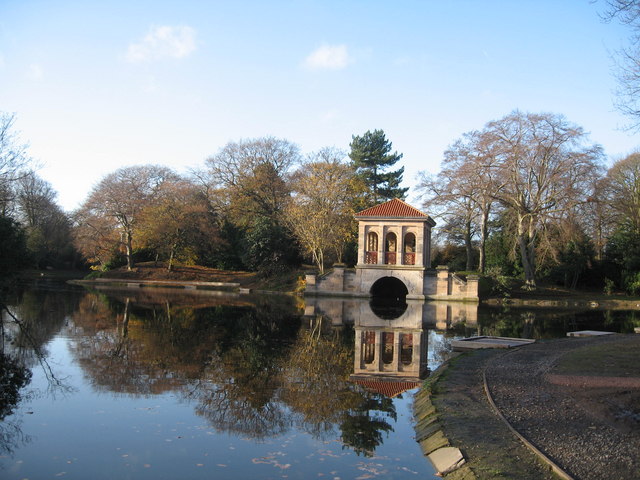
Birkenhead Park designed by Joesph Paxton opened in 1850.